Rwanda Cultural Safari Tours, Museums, History, Traditions, Dance & Norms
Cultural safaris in Rwanda provide a comprehensive understanding of the country’s rich heritage by integrating wildlife, art, and history with adaptable community engagement. These Cultural Safaris In Rwanda include visits to traditional villages such as Iby’Iwacu, museums (such as the Ethnographic and King’s Palace), traditional music and dance, and the opportunity to engage with local life beyond gorilla trekking in Volcanoes National Park. These Rwanda cultural safari Tours illustrate Rwanda’s unity and vibrant culture.
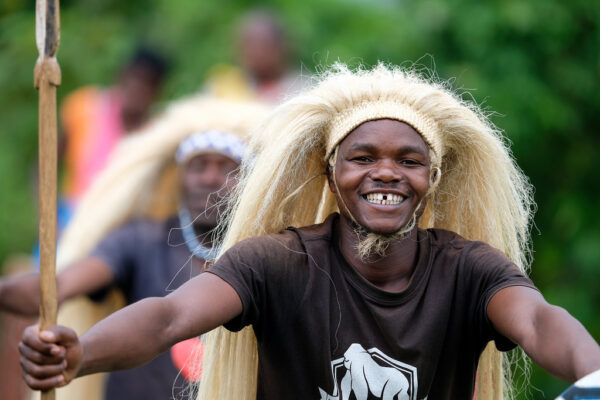 Many tourists are tricked into going gorilla trekking in Rwanda when it comes to Cultural Rwanda Tours, but the kindness of the Rwandan people is what makes the entire trip unforgettable. Cultural tours in Rwanda are an excellent means of comprehending the inhabitants of the land of a thousand hills.
You can visit Rwanda’s well-known cultural landmarks, such as the Kigali Genocide Memorial, through Rwandan cultural tourism. The cultural experiences of Rwanda encompass local music, dance, entertainment performances, and rural artistry, all of which are rooted in traditional agriculture, in addition to learning about the country’s history.
Uncover the various opportunities to engage in Rwanda’s cultural tourism in the land of a thousand hills by taking a Rwanda Cultural Safari Tour, which highlights the museums, traditional sites, and activities available.
A cultural tour of Rwanda provides an in-depth exploration of its history, art, and daily life, including visits to the significant Kigali Genocide Memorial, traditional villages such as Iby’Iwacu for dance and crafts, lively markets like Kimironko, royal palaces in Nyanza, and activities such as communal work (Umuganda), local cuisine, and contemporary art galleries, merging historical contemplation with dynamic modern culture for a comprehensive understanding of Rwanda’s resilience and traditions.
Museums – Cultural Tours in Rwanda
Significant museums for cultural tours in Rwanda comprise the Ethnographic Museum (Huye) for traditional life, the King’s Palace Museum (Nyanza) for monarchy, the Kigali Genocide Memorial for commemoration, and the Rwanda Art Museum, in addition to sites such as the Kandt House Museum for colonial history, providing profound insights into Rwandan heritage, governance, and artistic expression.
Museums preserve the historical narrative of the nation the Nyanza genocide memorial stands as one of the museums. Located on the premises of Kigali’s Ecole Technique Officielle, it contains almost 10,000 graves of Tutsi victims of the genocide. Currently, numerous concrete memorials delineate the location and serve as a prominent venue for annual commemorations of the genocide anniversary.
3. The Eastern Province’s Ntarama Genocide Memorial (Cyugaro Village, Rugarama Cell, Ntarama Sector, Bugesera District).
Historically, Bugesera was less populous than other regions of Rwanda due to its dense forest cover and swampy areas infected with tsetse flies. The upheaval in the northern sector of the country from 1959 to 1962 resulted in the forcible relocation of Tutsis to the Bugesera district, leading to its increased population density.
First Violent Conflict Period, 1959–1962
In 1959, the government resolved to consolidate internally displaced Tutsis from the Ruhengeri, Gisenyi, Gitarama, and Gikongoro wards and relocate them to the Nyamata Refugee Camp following the outbreak of violence in those regions. This was accomplished on November 22, 1959. The presence of both land and infrastructure resulted in Nyamata’s selection.
The poor living conditions and strong desire to go back to their homeland caused the relocated Tutsis a great deal of distress. During the United Nations General Assembly convened on December 11th and 12th, 1960, participants expressed their concerns and requested the closure of refugee camps. Notwithstanding numerous requests, the then-head of the UNHCR was unable to authorize the refugees’ return to their homeland to harvest their crops.
4. Nyamata Genocide Memorial
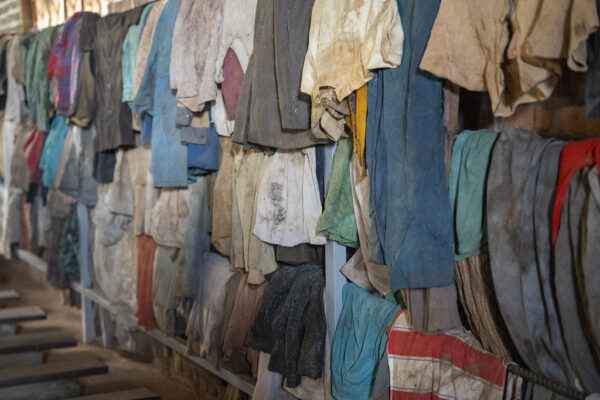 On April 11, 1997, the Roman Catholic Church desecrated the Nyamata Genocide Memorial, one of six National Genocide Memorial Sites in Rwanda, transforming it into a memorial to commemorate the victims of the genocide. Alongside a one grave, the church preserves the garments and personal belongings of the victims. Located behind the chapel are mass graves containing the remains of 45,308 individuals who fell victim to the genocide. The yearly memorial service for the deceased killed at this location occurs on April 11th. According to Nyamata guide Leon Muberuka, the death toll encompasses individuals killed inside the church as well as those whose remains were retrieved from the adjacent area. Historically, the plot of land now occupied by the monument belonged to the Nyamata Parish.
5. Murambi Genocide Memorial
The Murambi Genocide Memorial was inaugurated on April 21, 1995. Murambi, the location of a new technical school, became a refuge for Tutsis escaping the genocide in their area. Approximately fifty thousand individuals, including residents from the vicinity, were killed at the technical school; currently, Murambi serves as one of six national genocide memorial sites. It is estimated that merely 34 individuals from this locale survived the Holocaust. The victims of the Murambi disaster are honored each year on April 21st.
6. Kandt House Museum
Prior to the onset of the 20th century, Richard Kandt held the position of Germany’s colonial administrator in Rwanda. The Kandt House Museum in Kigali is organized into three main areas. The first portion covers Rwandan politics, economy, and society prior to colonization.
The second half presents the colonial era from the perspective of the Rwandan people. Prior to Belgian authority in 1916 under the League of Nations Mandate during World War I, Rwanda was administered by the Germans subsequent to the 1884 Berlin Conference. This encompasses the life and contributions of Richard Kandt in Rwanda.
Part three explores Kigali’s history, encompassing events preceding, occurring during, and following the colonial era. Shortly after Rwanda attained independence in 1962, Kigali was appointed as the capital.
7. Presidential Palace Museum
At this newly established museum, which was previously known as the Presidential Palace Museum, visitors can view contemporary artworks from Rwanda and globally.
The museum’s objective is to exhibit Rwandan creativity in its entirety. It examines the progression of art from historical times to the present, contemplating the coexistence of current and ancient concepts.
The wreckage of the presidential jet that crashed on April 6, 1994, remains in the garden and will be conserved as a historical site.
This is a frequently visited memorial site for travelers seeking to understand the history of Rwanda. The palace was previously the house of Juvenal Habyarimana, Rwanda’s final president before the 1994 Genocide. The former president was shot on April 16, 1994, and coincidentally, his 60-passenger jet crashed at his residence. The remnants of the jet persist, but of more significance is the contentious history of this location, which the guides thoroughly elucidate at each site surrounding the house.
Artisan markets and craft centers
Rwandan crafts are distinctive and available for purchase in several markets. Imigongo, or cow dung paintings, are an unique Rwandan craft created by a local cooperative in Nyakarambi village.
The artworks are distinctive, including earthly images characterized by swirling patterns of black, brown, and white, interspersed with various geometric forms. Additional crafts encompass weaving and basketry, a traditional art form involving the creation of dry containers for food storage.
Pottery is one of the most ancient art forms in Rwanda. High-quality clay is extensively utilized in the production of pottery for culinary purposes and liquid storage.
8. Umuganda
Umuganda is not a cultural location but rather a cultural practice in Rwanda, where Rwandans from many backgrounds unite to contribute to the welfare of their communities. Umuganda can be defined as “the collective effort towards a shared objective to attain a result.” This occurs on the final Saturday of each month, as all Rwandans suspend their personal activities during the morning hours. On this day, all shops and companies are closed, buses are not functioning, and several activities are halted as individuals are required to engage in public works initiatives like as cleaning, tree planting, constructing homes for the vulnerable, and more. This custom has established Rwanda as the cleanest town in the country. Umuganda impacts certain tourist activities, such as Kigali city tours; thus, it is prudent to consider this on the last Saturday of the month while organizing a tour in Rwanda.
Rwanda Cultural Tours provide an exceptional opportunity to comprehend the nation’s tumultuous history and its remarkable transformation, while also gaining insight into its traditions.