Peak Dry Season — June to August & December to February
The two dry seasons represent the most popular and, in many practical respects, the most comfortable time for gorilla trekking across all three countries. Forest floors are firmer, trails less treacherous, and gorillas more likely to range into open areas where visibility improves. For Uganda, July and August are the most heavily subscribed months — permits are exceptionally difficult to secure without six to nine months’ advance booking. Rwanda’s June, July, and August dates are similarly sought-after. December through February offers a slightly less crowded dry season window and is an excellent time for travellers with school-age children who cannot travel in northern hemisphere summer.
Green Season — March to May & September to November
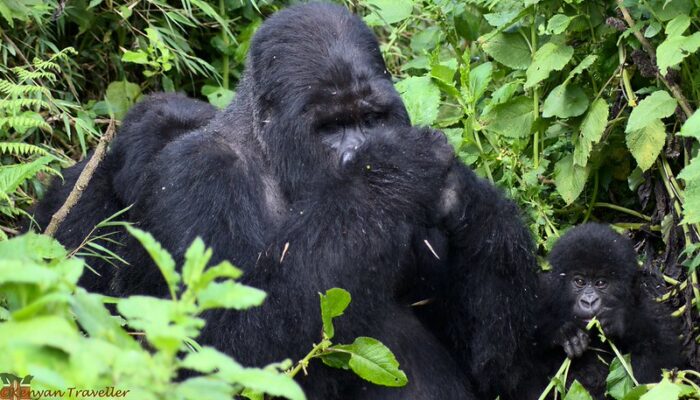
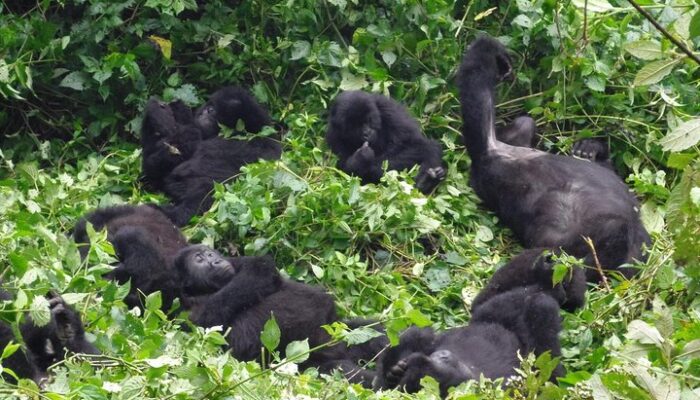
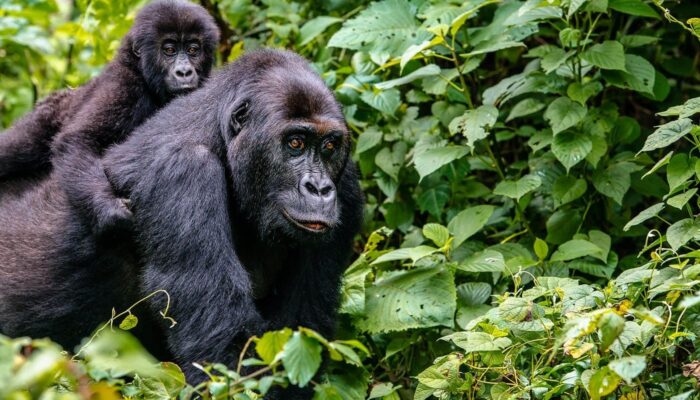
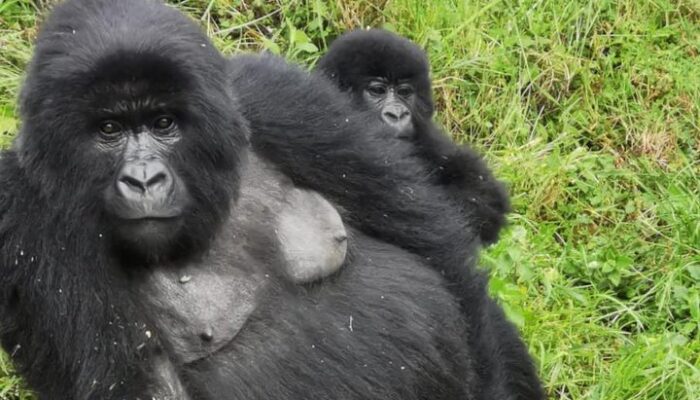
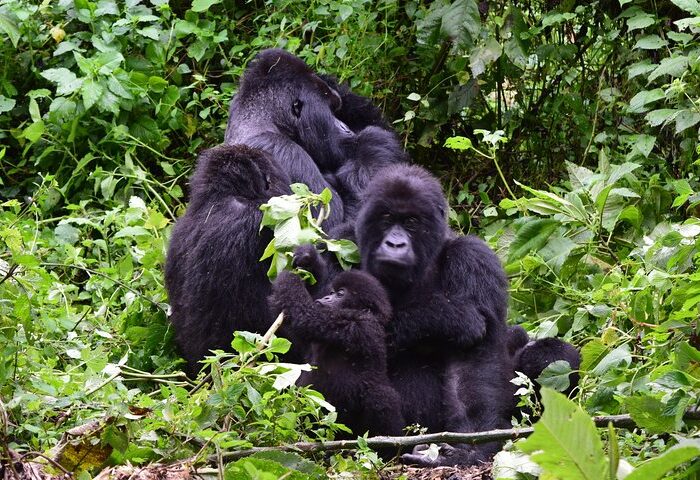
Uganda’s long rains fall between March and May; the shorter rains arrive September to November. Rwanda’s rainy seasons are broadly similar. The green season is one of the best-kept secrets in gorilla travel. The forest is at its most photogenic — every surface glistening, the canopy impossibly lush, infant gorillas playing with particular exuberance in the new growth. Permits are easier to secure at shorter notice. Lodges offer their most competitive rates. Trails are quieter. The only trade-off is mud — genuine, deep, sometimes boot-claiming mud on the steeper approaches — and the occasional afternoon downpour. Good waterproofs and gaiters address both. For budget-conscious travelers and those who simply prefer the world when it is green and alive, the wet season is an outstanding choice.
The Year-Round Reality
It is worth stating clearly: gorilla trekking is a year-round activity in both Uganda and Rwanda. Neither country has a season in which trekking stops or becomes genuinely inadvisable for healthy adults. The choice of when to travel is driven primarily by personal preference for conditions and crowd levels, and by the practical constraint of permit availability in peak months. Aloyo Safaris helps every traveler navigate this calculation honestly, based on your specific dates and expectations.
Frequently Asked Questions About Gorilla Trekking in Africa
How many mountain gorillas are left in the world?
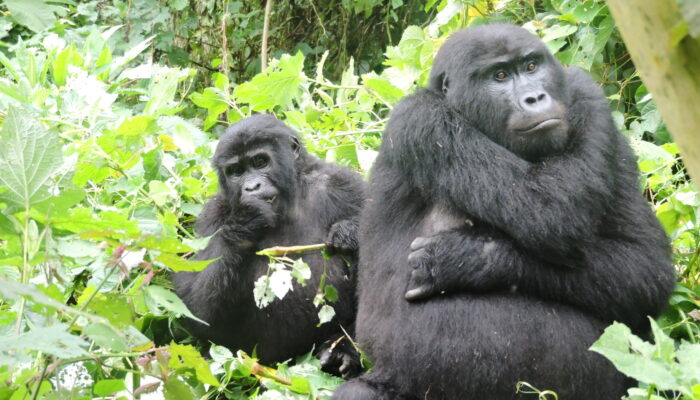
As of the most recent census data, the global mountain gorilla population stands at approximately 1,063 individuals, all living wild in the Virunga massif (spanning Uganda, Rwanda, and the DRC) and in Uganda’s Bwindi Impenetrable National Park. This figure represents genuine progress from the roughly 620 individuals counted in the late 1980s, making mountain gorillas one of the few critically endangered large mammals whose numbers have increased in recent decades — a direct result of conservation efforts funded substantially by gorilla trekking tourism revenue.
How much does a gorilla trekking permit cost?
Gorilla trekking permit prices are set by the respective national wildlife authorities. In Uganda, permits cost USD $800 per person for the standard one-hour gorilla trek, and USD $1,500 per person for the gorilla habituation experience (up to four hours). In Rwanda, a gorilla trekking permit costs USD $1,500 per person. In the Democratic Republic of Congo, permits are more affordable (approximately USD $400 per person) but require a full assessment of current security conditions. These prices are subject to change by the issuing authorities; Aloyo Safaris will confirm current pricing at the time of inquiry.
How difficult is gorilla trekking physically?
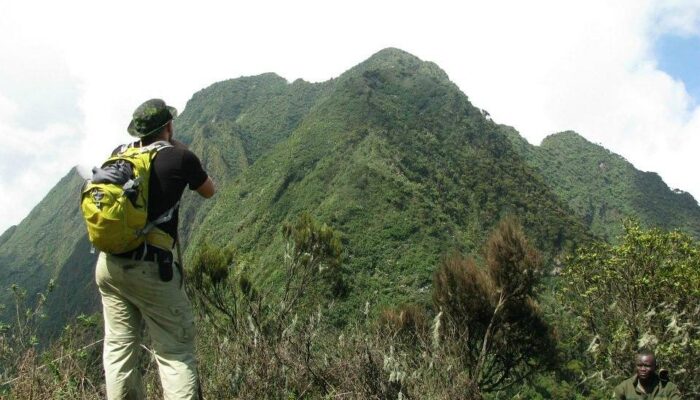
Gorilla trekking involves walking through tropical montane forest — often on steep, uneven, and frequently muddy terrain — for anywhere between one and six hours. The trek difficulty is classified as moderate to strenuous, depending on where the gorillas are on any given day. A reasonable level of fitness is recommended: the ability to walk for several hours at a sustained but unhurried pace, manage steep ascents, and navigate vegetation that occasionally requires hands and knees. Porters are available at all trekking sectors and are both practically useful (carrying bags, offering physical support on steep sections) and economically beneficial to the local community. Aloyo Safaris discusses fitness requirements with every client during the planning stage.
What is the minimum age for gorilla trekking?
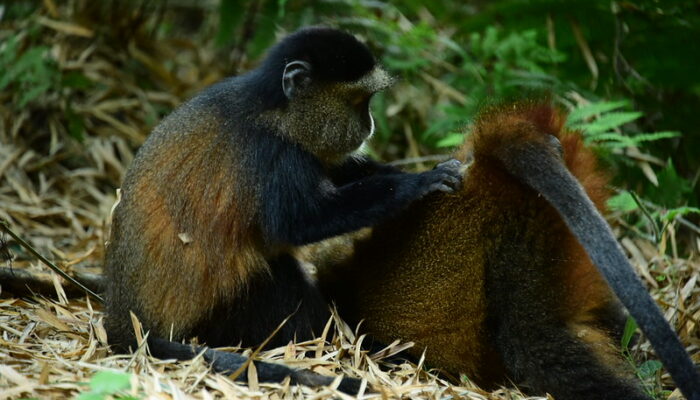
Both Uganda Wildlife Authority and Rwanda Development Board set the minimum age for gorilla trekking at 15 years. This restriction exists to protect the gorillas from childhood diseases and to ensure that the trekking group can maintain safe distances and follow ranger instructions responsibly. For families travelling with younger children, Aloyo Safaris designs alternative activities on trekking days — guided forest walks, cultural village visits, or golden monkey tracking where age restrictions are less restrictive — ensuring that younger family members have equally engaging experiences.
How many people are allowed to see gorillas at once?
Uganda Wildlife Authority and Rwanda Development Board both limit gorilla trekking groups to a maximum of eight visitors per gorilla family per day. This cap is absolute and strictly enforced. It exists to protect the gorillas from excessive human disturbance and disease risk, and to maintain the quality and intimacy of the encounter for visitors. Each gorilla family therefore has a maximum of eight permits available per day across all operators combined — which is why securing permits well in advance is so important, and why Aloyo Safaris prioritises permit procurement as the first step in any booking.
Is it safe to be close to mountain gorillas?
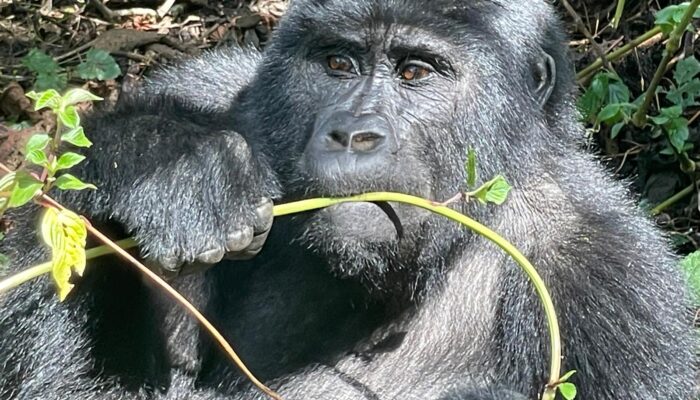
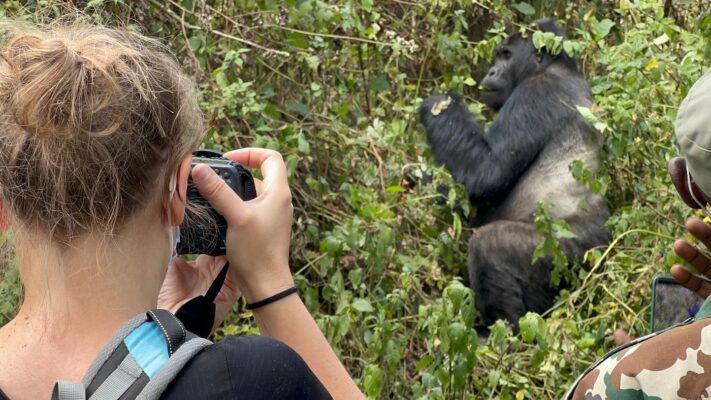
Gorilla trekking is remarkably safe when conducted through properly regulated channels with habituated gorilla families. The habituation process — which takes years of careful, daily work by dedicated rangers — results in gorilla families that are calm and largely indifferent to human presence. The protocols enforced by UWA and RDB rangers (seven-metre minimum distance, no flash, no eating or drinking, backing away if a gorilla approaches) are designed both to protect the gorillas and to ensure visitor safety. Incidents involving gorillas and visitors are extremely rare. Your Aloyo Safaris guide will brief you thoroughly on behaviour and body language before and during the trek.
What should I wear for gorilla trekking?
Long-sleeved shirts and long trousers in neutral colours (khaki, olive, grey, brown) are recommended — both to protect against vegetation and insect contact and to avoid startling the gorillas with bright colours. Sturdy, ankle-supporting hiking boots with grip soles are essential. Waterproof gaiters are strongly recommended in the wet season and useful year-round in Bwindi. A lightweight waterproof jacket handles the frequent mist and afternoon rain. Gardening-style gloves protect hands when grabbing vegetation on steep sections. Aloyo Safaris provides a comprehensive packing list as part of every pre-departure information pack.
Can I combine gorilla trekking with other Uganda or Rwanda experiences?
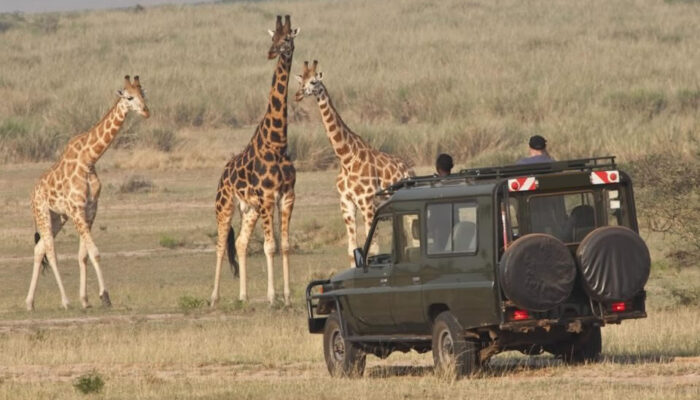
Absolutely — and Aloyo Safaris strongly recommends it. Gorilla trekking is the centrepiece of any Uganda or Rwanda safari, but it is far from the only extraordinary experience these countries offer. Uganda alone provides chimpanzee tracking in Kibale Forest, game drives in Queen Elizabeth and Murchison Falls National Parks, golden monkey trekking in Mgahinga, and Rwenzori mountain trekking. Rwanda offers chimpanzee tracking in Nyungwe Forest, wildlife viewing in Akagera, and golden monkey encounters in Volcanoes National Park alongside the gorilla trek. A combined Uganda-Rwanda itinerary is one of the most richly layered journeys available anywhere in Africa.
How far in advance should I book a gorilla safari?
For peak season travel (June, July, August, and December through February), Aloyo Safaris recommends beginning the booking process at least six to nine months in advance. This is primarily driven by gorilla permit availability: with only eight permits per gorilla family per day across all operators in Uganda, and similarly limited numbers in Rwanda, peak-season dates are claimed many months ahead by operators worldwide. For shoulder-season and green-season travel (March to May, September to November), three to four months of lead time is generally sufficient. The earlier you begin planning, the greater the choice of lodge, dates, and gorilla family assignment.
Do I need travel insurance for a gorilla safari?
Comprehensive travel insurance is not merely recommended — it is essential. Gorilla trekking takes place in remote highland terrain, often at altitude and far from major medical facilities. Your policy should cover medical evacuation, trip cancellation (gorilla permit fees are non-refundable once confirmed), and emergency repatriation. Aloyo Safaris provides guidance on appropriate insurance products during the planning process and will not confirm any booking without evidence of adequate coverage.
Secure your gorilla trekking permit early
Visitors intending to go for gorilla trekking during the peak season, must acquire their gorilla trekking permits early enough, at least 6 months prior to the gorilla trekking date.
Rwanda gorilla permits cost $1500, Uganda Gorilla permits cost $800 and Congo gorilla permits are at $400. Each purchased Gorilla trekking permit per person per day qualifies for one(1) Gorilla family including spending 1 full hour with them.
Gorilla trekking permits can be purchased through a reliable & licensed Tour Operator company or directly from the Uganda Wildlife Authority in Uganda, Rwanda development Board in Rwanda. While a gorilla habituation permit costs $1500, which involves only 4 persons in the company of researchers to stay for at most 4 hours in the gorillas’ presence.
What to pack For Gorilla Trekking In Africa.
Packing Light is highly recommended, when planning to go for a gorilla trekking experience in Uganda’s Bwindi impenetrable National Park & Mgahinga Gorilla National Park, Rwanda’s Volcanoes National Park, and Congo’s Virunga National Park & Kahuzi Biega National Park
The packing list for gorilla trekking includes among others: waterproof hiking boots, waterproof day pack, insect repellents, rain jacket, camera without flash light, binoculars, long sleeved shirt/t-shirt, trousers, sweaters, sun glasses, hat, bottled water, energy giving snacks, first aid kit, walking stick.
Thinking what to wear during gorilla trek? Each traveler is urged to wear environmentally friendly clothes, whose colors are not shouting, and yes don’t forget, long sleeved shirts or t-shirts, trousers, rain jacket-to protect you in case it rains.
Physical fitness For Gorilla Trekking
Despite the fact that gorilla trekking can be done by everyone, it still requires you to be physically fit. Gorilla trekking in Africa can take between 2 to hours, which comprises of traversing through thick forest and steep slopes, when looking for mountain gorillas. However, you also need to carry plenty of water so as to stay hydrated, as well as energy snacks, since most gorilla families/groups take refuge in higher elevations, which requires more energy
On the other hand, you can opt to hire a porter at $10 or $20(depending on the weight) , in case your luggage is heavy, so that you can enjoy your gorilla trekking experience, while they help you carry.
What are the Gorilla trekking Rules & Regulations?
Whether you have trekked gorillas before, or it’s your first time, every gorilla trekking Enthusiast must adhere to the gorilla trekking rules and regulations, issued by guides and rangers each day, very early in the morning, before embarking on the actual gorilla trekking.
Some of the gorilla trekking rules & regulations include among others; Maintaining a 7 meter distance when with them, remain still whenever they charge, don’t use cameras with flashlights, only persons with at least 15 years of age are allowed to trek gorillas, Interact with the gorillas for at most 1 hour, don’t trek mountain gorillas when you are sick, don’t litter the park click here for more…
In conclusion, gorilla trekking still remains a top notch bucket list activity in the pearl of Africa. Yet to have a memorable experience, it is important to have knowledge about these gorilla trekking tips, when planning for a safari in Uganda. Besides Gorilla trekking, we also offer numerous fascinating experiences which can be combined with gorilla trekking: such as Wildlife safaris , White Water rafting, Wildebeest migration, Balloon safaris, Chimpanzee tracking, bird watching, Rwenzori trekking, and cultural encounters
 The alarm sounds in the dark — typically around 5:30am — and the cool mountain air is immediate and bracing when you step outside. Breakfast is served early and kept light: eggs, toast, fruit, strong East African tea or coffee. Your private guide from