Rwenzori Mountains National Park, Routes, Best Time & Rwenzori Trekking Packages

Rwenzori Mountains National Park is national park in Uganda, a UNESCO World Heritage Site in the Rwenzori Mountains. Rwenzori National Park, spans about 1,000 km² and features Africa’s third tallest mountain peak, along with several waterfalls, lakes, and glaciers. Rwenzori Mountains National Park occupies the western edge of Uganda along the border with the Democratic Republic of Congo, sitting in the broad valley of the Albertine Rift — one of the most biodiverse regions on earth. The park covers approximately 1,000 square kilometres and stretches roughly 120 kilometres from north to south and 65 kilometres from east to west. It was gazetted in 1991, achieved UNESCO World Heritage Site status in 1994, and was designated a Ramsar Wetland Site of International Importance in 2008. It is managed by Uganda Wildlife Authority (UWA) in partnership with the local Bakonzo community operators who staff the trails, huts, and porter teams.

The gateway towns are Kasese (the primary access point for both the Central Circuit and the Kilembe Trail), located approximately 380 kilometres from Kampala by road or about 1.5 hours by charter flight.

The Nyakalengija trailhead for the Central Circuit is 22 kilometres from Kasese; the Kilembe trailhead is approximately 14 kilometres from town on the southern approach.

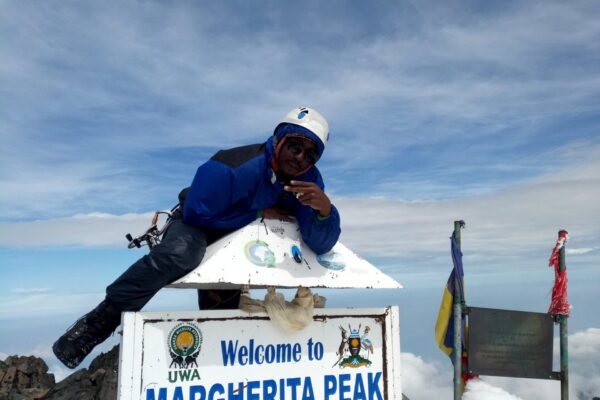
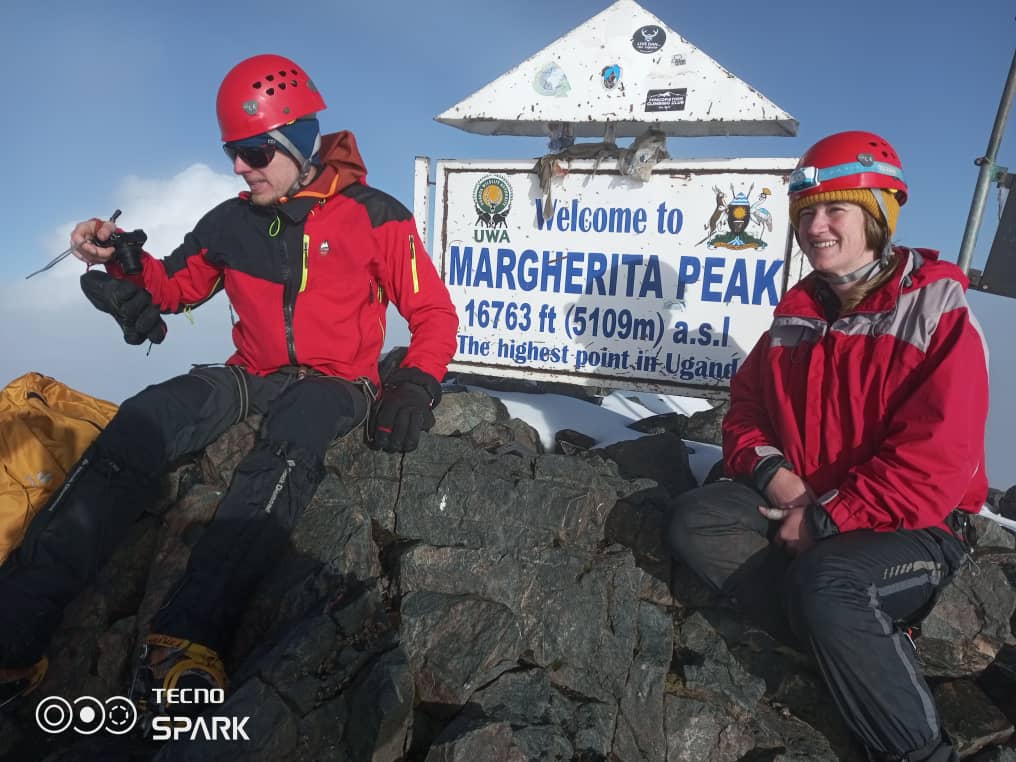
Fewer than 1,500 people trek the Rwenzori in an average year. This is not a mountain that advertises itself. It does not have the nameplate of Kilimanjaro or the accessible fame of Kenya. It requires more: more preparation, more patience, more willingness to be genuinely wet, genuinely cold, and genuinely astonished at the same time. What it gives in return is an encounter with landscape that has no equivalent anywhere else on earth, and a summit — Margherita Peak at 5,109 metres — that is Africa’s third highest point and, for those who have stood on it, one of the continent’s most private and profound rewards.

7 Days Rwenzori Mountain Trekking

Rwenzori Mountains & Peaks(A Massif of Six Mountains)

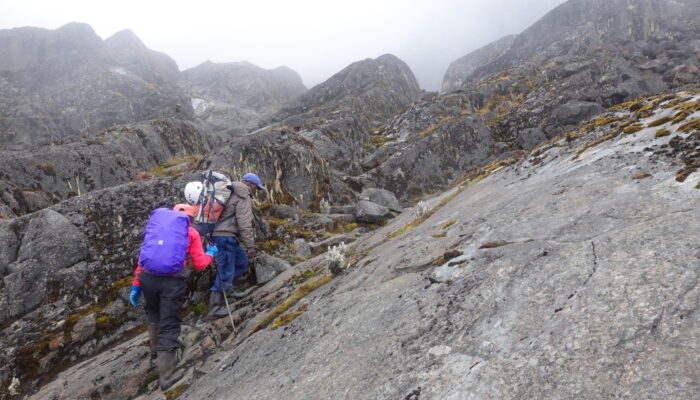
Unlike Kilimanjaro’s single volcanic summit, the Rwenzori is a complex of six distinct massifs, each with multiple named peaks. Mount Stanley, the highest, carries the twin summits of Margherita (5,109m) and Alexandra (5,091m) on its narrow glaciated ridge — Africa’s third and fourth highest points respectively. The Margherita summit requires technical glacier travel and is attempted only by experienced trekkers on the longer circuit variants.

Mount Speke (4,890m) rises to the east of Bujuku Lake and is reached via the Vittorio Emanuele route — a popular alternative summit for those not equipped for glacier work. Mount Baker (4,843m) is accessed from the Kitandara valley and offers a route that some climbers consider the finest non-glacial ascent in the range. Mount Emin (4,798m), Mount Gessi (4,715m), and Mount Luigi di Savoia (4,627m) complete the principal summits, all accessible on the extended circuit variants and the 13-day six-peak expedition.

Important note: Following a period of temporary closure to ensure safety on the upper glacier sections, Uganda Wildlife Authority has confirmed the resumption of hiking to Margherita Peak, having constructed a bridge across the crevasse in the Margherita glacier and installed additional climbing ropes in collaboration with trail partners. Margherita is fully open. Aloyo Safaris confirms current access status with UWA for every expedition booking.

Vegetation Zones Of The Rwenzori Mountains National Park

The Rwenzori passes through six distinct vegetation zones as the altitude rises, each one a genuinely different world with its own ecology, sensory character, and emotional atmosphere. Understanding them is part of preparing for the mountain — not as botanical taxonomy but as a succession of experiences.

The montane forest zone (1,600m to 2,500m) greets every trekker at the trailhead: dense, warm, layered with birdsong, alive with blue monkeys and black-and-white colobus crashing through the fig and podocarpus canopy. The bamboo zone (2,000m to 2,500m) follows — tall, rhythmic, filtering light into long green shafts, with the particular acoustics of a forest that is more hollow stem than solid wood. The heather zone (2,500m to 3,500m) is where the landscape begins its transformation: Erica arborea trees reaching six metres, their branches coated in such quantities of old man’s beard lichen that they appear to be slowly dissolving into the cloud. The moorland zone (3,000m to 4,000m) opens the landscape out — rolling, bracken-covered, with the first clear views of the peaks above and the lowlands, improbably far below, through gaps in the cloud.

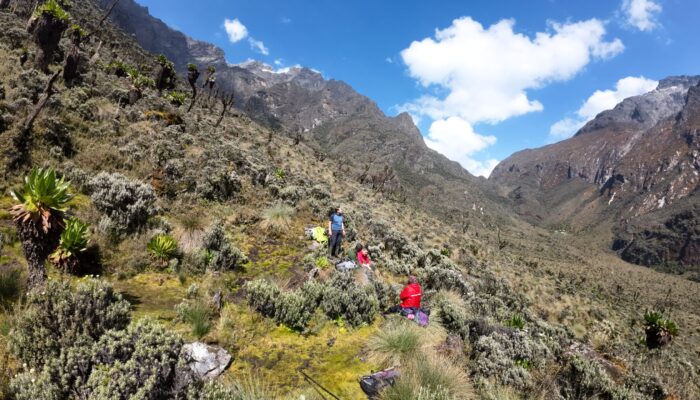
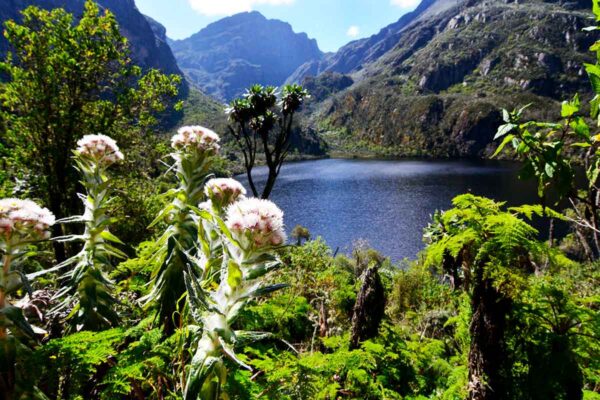
But it is the afro-alpine zone (3,500m to 4,500m) that makes the Rwenzori singular — the zone that exists, in this form, nowhere else on earth. Giant lobelias (Lobelia wollastonii) rise to six metres, their architectural rosettes and dramatic flowering spikes standing in wetland meadows like figures from a dream. Giant groundsels (Dendrosenecio adnivalis) grow to five metres, their cabbage-head crowns silhouetted against the mist with prehistoric improbability. Every surface — the rocks, the tree trunks, the very air — is upholstered in moss. The sound in this zone, in still weather, is of water moving through vegetation. Finally, the glacial and nival zones above 4,500m: bare rock, ice-smoothed and fissured, the remaining glaciers of Stanley and Speke catching light in shades of blue that have no names in everyday language

Wildlife of the Rwenzori Mountains

The Rwenzori’s forests and moorlands support a remarkable diversity of mammals and birds, many of them Albertine Rift endemics found nowhere else in the world. In the lower forest zones, chimpanzees are present and occasionally heard — their calls travelling considerable distances through the forest — though sightings are less reliable than in Kibale’s habituated research communities. Forest elephants move through the montane and bamboo zones, leaving tracks and browse evidence that your guide will identify on the trail. L’Hoest’s monkeys, olive baboons, side-striped jackals, and giant forest hogs inhabit the lower and mid-altitude zones.

The Rwenzori is one of Uganda’s finest birding destinations, with over 217 species recorded including 19 Albertine Rift endemics.

Wildlife Of Rwenzori Mountains National Park

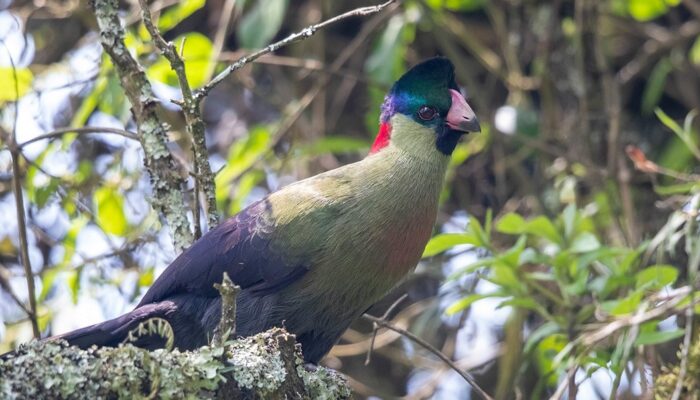
The Rwenzori turaco — brilliant crimson and green, the park’s emblem — is encountered in the forest zones with regularity. Handsome francolins call from the heather zone. The Rwenzori batis, the strange weaver, and the barred long-tailed cuckoo inhabit specific elevation bands. The Denham’s bustard frequents the moorland. For dedicated birders, the Rwenzori offers a species list that would justify the trek even without the summit.

Three Trekking Routes Of Rwenzori Mountains National Park

Central Circuit Trail/Route Rwenzori

The Rwenzori Central Circuit TRail

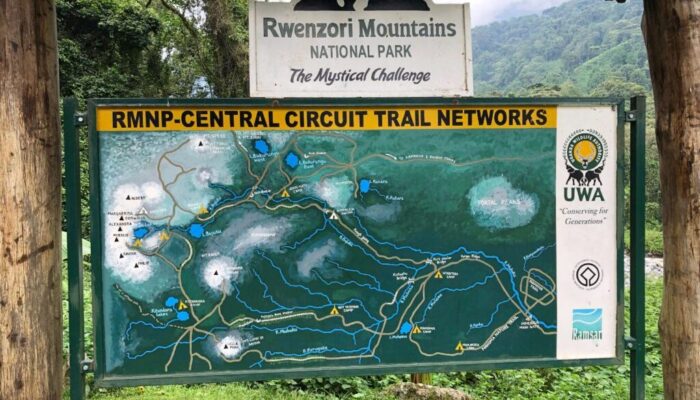
The Central Circuit is the oldest and most established route in the Rwenzori — first used commercially in the early twentieth century and continuously operated since by Rwenzori Mountaineering Services (RMS), a community-based operation employing guides, porters, and cooks from the local Bakonzo communities. The trail begins at the Nyakalengija/Mihunga gate (1,651m), approximately 22 kilometres from Kasese, and traces a loop through the mountain’s interior via a chain of six mountain huts: Nyabitaba (2,651m), John Matte (3,414m), Bujuku (3,962m), Elena (4,541m), Kitandara (4,027m), and Guy Yeoman (3,261m).

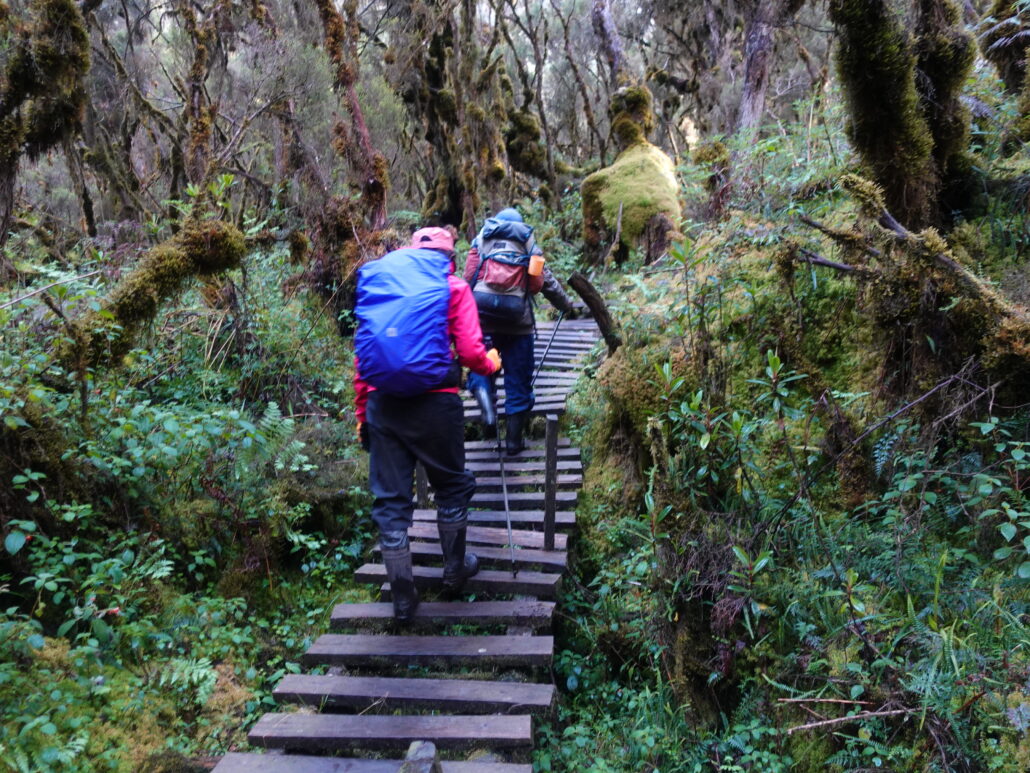
The Central Circuit is described as the shortest and most convenient route to Margherita Peak, approaching the summit from the east via the Scott Elliot Pass (4,372m) and Elena Hut. The standard completion time is seven days for the full circuit with Margherita summit attempt. Shorter variants — the six-day Weismann Peak trek and the five-day lower circuit — are available for those seeking less altitude or fewer days on the mountain. The trail navigates all five lower vegetation zones and crosses the famous Bigo Bogs — sections of deep, saturated moorland traversed on boardwalks that make the crossing possible but not always dignified.

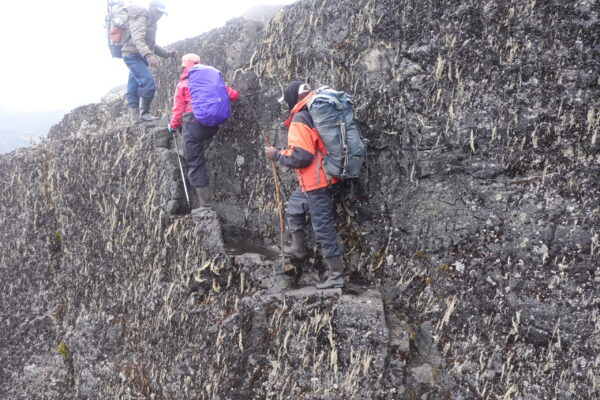
The huts on the Central Circuit are basic but weather-proof — sleeping platforms, blankets, a camp kitchen — and the cooks who work this route have developed menus that are surprisingly good given the logistical constraints of resupply at altitude. The trail’s primary challenge is not its length but its conditions: the section between John Matte and Bujuku passes through some of the most consistently wet terrain in the range, and waterproofing — of both equipment and attitude — is essential.

The Kilembe Trail Of Rwenzori

Rwenzori Kilembe trail Route

The Kilembe Trail enters the Rwenzori from the south, beginning at the former copper mining settlement of Kilembe village (about 14 kilometres from Kasese) and operated by Rwenzori Trekking Services (RTS). Though the route was first surveyed by Professor Scott Elliott in 1895, it was formally opened for tourism only in 2009 with the construction of a series of new huts — purpose-built to a higher standard than the original Central Circuit facilities — that have quickly earned a reputation for quality among experienced Rwenzori trekkers.

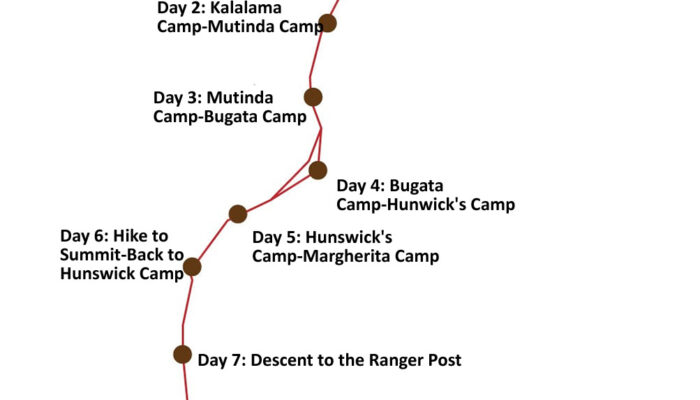
The Kilembe Trail is the longest route to Margherita Peak and provides the most gradual acclimatisation profile of the three main trails — a significant advantage for altitude-sensitive trekkers. The southern approach passes through a sequence of landscapes that many experienced guides consider more varied and more dramatic than the Central Circuit: the lower sections include more than eight significant waterfalls in their opening kilometres, and the route traverses a succession of glacial valleys and lake basins that feels, at each turn, like a different chapter of the same overwhelming story. The hut sequence on Kilembe — Sine, Mutinda, Bugata, Lake Mahoma, Margherita Camp — takes eight to nine days for the full summit variant.

The Kilembe Trail is Aloyo Safaris’ preferred route for most first-time Rwenzori trekkers, particularly those combining the mountain with wider Uganda safari experiences. The acclimatisation profile, the waterfall sections, the community engagement at Kilembe village, and the overall quality of the RTS operation make it the most complete introduction to the Rwenzori’s character.

Bukurungu Wilderness Camping Trail

Bukurungu Trail Route Rwenzori Mountains

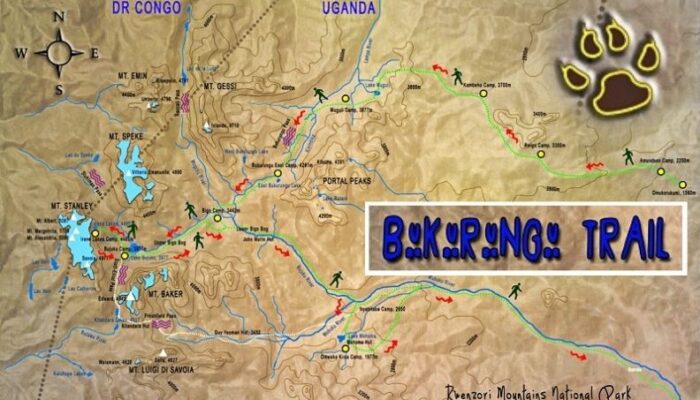
The Bukurungu Trail is the newest and most adventurous of the three established routes, developed after the Central Circuit and Kilembe trails and operated by Bujuku Eco Tours under the oversight of Rwenzori Mountains National Park management. It is the only pure camping trail in the range — there are no huts along this route, only organised, safe camping areas — making it the choice for experienced wilderness trekkers who want an unmediated relationship with the mountain and do not require the comfort infrastructure of the hut routes.

The Bukurungu Trail passes four mountain lakes — Mughuli, Bukurungu, Bujuku, and Irene — in a sequence that builds from intimate valley settings to the high, austere landscapes of the upper glacial zones. The trail takes eight days to complete and includes a Margherita summit attempt on the standard itinerary. The absence of huts requires a complete camping kit; porters carry tent equipment and cooking gear that is not required on the hut routes. For trekkers with genuine wilderness camping experience and a tolerance for variable conditions, the Bukurungu offers perhaps the most visceral and private experience of the Rwenzori available to any visitor.

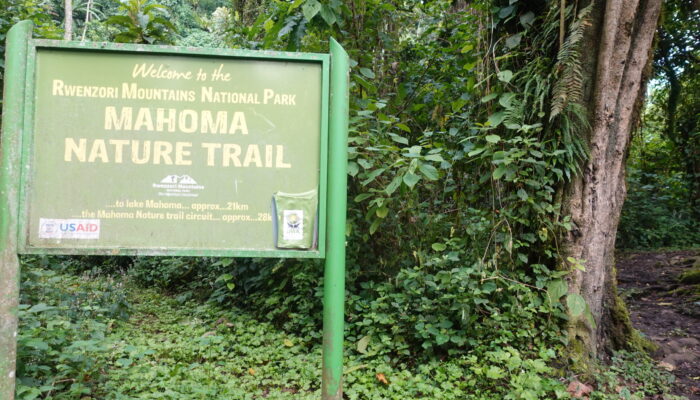
The Mahoma Loop: A 3-Day Of Rwenzori Hike

3 Days Mahoma Loop Trail

Not everyone has eight days for a mountain. The Mahoma Loop — a 28-kilometre circuit trail on the Central Circuit’s lower approaches — provides three days of authentic Rwenzori experience without the commitment of a full circuit trek. The trail reaches its high point at Mahoma Lake (approximately 3,200m) through lower montane forest, bamboo, and the beginning of the heather zone. It is suitable for trekkers of moderate fitness with no high-altitude experience and delivers, at its apex, one of the most quietly beautiful lake settings in all of Uganda. Mahoma Lake in the early morning — still, glass-surfaced, rimmed with giant heathers and reflecting the sky — is the kind of image that travels home with you and stays.

The Mahoma Loop is the ideal first Rwenzori experience for families with older teenagers, solo travellers exploring Uganda for the first time, or anyone who wants to understand what the mountain is before committing to its full demands. Many travellers who complete the Mahoma Loop book the full Central Circuit or Kilembe Trail within the following year. Aloyo Safaris offers the Mahoma Loop as a standalone experience or as part of a wider Uganda safari itinerary combining Rwenzori with Queen Elizabeth or Kibale.

Route Comparison: Choosing the Right Trail for You

Central Circuit — Best For: Established infrastructure, shorter duration, most flexible variants

The Central Circuit suits trekkers who want the Rwenzori’s full mountain experience in the minimum viable time frame. Its seven-day Margherita variant is the shortest full-summit itinerary available. The hut system is well-established, the guides deeply experienced, and the route’s manageable distances (6–10 kilometres per day) make it accessible to a wide range of fitness levels. The primary disadvantage is the Bigo Bog section and the generally wetter, more treacherous trail conditions compared to Kilembe. Best for: experienced trekkers with limited time, those who have done alpine trekking before and know their rhythm.

Kilembe Trail — Best For: First-timers, superior acclimatisation, premium hut quality

The Kilembe Trail is Aloyo Safaris’ most frequently recommended route for good reason: its gradual ascent profile provides the best acclimatisation of any Rwenzori route, its waterfall-rich lower sections are among the most scenic in the range, and the RTS huts are the best-maintained mountain accommodation in the park. At eight to nine days for the full summit, it requires more time than the Central Circuit but rewards that investment with a significantly safer and more comfortable summit experience. Best for: first-time high-altitude trekkers, those prioritising safety and comfort, families with fit adult members.

Bukurungu Wilderness Trail — Best For: Experienced campers, maximum solitude, adventurous trekkers

The Bukurungu Trail offers the most wilderness-immersive experience in the Rwenzori, with no huts, organized camping areas, four mountain lakes, and the genuine solitude of a route that receives very few visitors. It demands full camping readiness — sleeping bags to -15°C, complete wet-weather systems, and prior multi-day wilderness camping experience. At eight days with Margherita summit, it is equivalent in duration to the Kilembe Trail but fundamentally different in character. Best for: experienced alpine campers, those who have completed other technical African treks, small groups who want the mountain entirely to themselves.

Mahoma Loop — Best For: Families, beginners, time-limited travellers, wider safari combinations

The three-day Mahoma Loop requires no technical experience, reaches a comfortable 3,200 metres, and delivers a genuine Rwenzori experience in a timeframe that fits naturally into a wider Uganda safari itinerary. Suitable for fit teenagers, older travellers, and anyone who wants to understand the mountain before committing to its full demands. Best for: families, solo travellers on first Uganda visit, those with five to seven total days in Uganda combining safari parks with the Rwenzori.

Best Rwenzori Mountains Trekking Expeditions

At Aloyo Safaris, we have guided families, solo adventurers, couples, and small groups through these mountains across every trail and every season. This guide — the most comprehensive English-language resource on Rwenzori trekking available from a Uganda-based operator — covers everything: the park’s geology, ecology, and wildlife; every trekking route in detail; day-by-day itineraries for the Central Circuit, Kilembe Trail, Bukurungu Wilderness Trail, and the Mahoma Loop; packing lists and fitness preparation; best season guidance; accommodation options; costs; and the full FAQ that experienced Rwenzori guides have developed over years of answering real questions from real travellers. If this mountain is calling you, this is where you answer it.

3 Days Mahoma Loop Trail

3 days Mahoma Loop

The 3 days trekking Mahoma loop Rwenzori trekking expedition is a short budget camping nature walk through the lush forest vegetation cover of the Rwenzori Mountains National Park.

7 Days Rwenzori Kilembe Trail Trek

4 Days Mutinda Lookout Trek

4 day trek to Mutinda lookout in Rwenzori Mountains National Park, traverses through the Lush Afro montane Vegetation, with beautiful views of the Mount Stanley, & Nyamwamba valley,

5 Days Rwenzori Trekking to margherita

5 days To Weismann Peak

Embrace yourself with the stunning views of the  Mount Speke,  Mount Stanley, & Mount Baker when the sky is very clear, on this 5 days Rwenzori trekking To Weismann Peak at 4620m Via Kilembe trail

13 Days Margherita, Gorillas & Chimpanzees

7 Days Central Circuit Trek

7 days Rwenzori trekking of the central circuit trail   is an actual Rwenzori trek that starts from the foothills ofthe Rwenzori Mountains National Park, to Margherita peak

9 Days Mt. Stanley (Margherita), Speke & Baker Rwenzori

8 Days Kilembe Trail Trek

Go for an 8 day Rwenzori trekking  to Margheitah peak via Kilembe trail route. This 8 day Rwenzori Kilembe trek takes you through breathtaking vegetation zones of Mount Rwenzori.

climbing to Elena hut

7 Days Weismann & Baker.

The 7 day trek to Weismaan & Mount Baker takes you through the lush vegetation, takes you via

Kilembe trail route to Wesimann Peak(4620m) & Mount Baker at 4842m.

What Is Included & Excluded in the Rwenzori Trekking Expeditions Safari

What’s Included

Every Rwenzori expedition booked through Aloyo Safaris is fully transparent in its inclusions. The following are confirmed before departure and require no additional arrangement on the mountain:

  • All Uganda Wildlife Authority national park fees — USD $30 per person per day
  • Certified RMS or RTS mountain guide — English-speaking, first-aid trained, glacier-certified for summit routes
  • Full porter team — minimum one porter per trekker for personal gear (maximum 15kg per porter for personal loads)
  • Expedition cookall meals prepared on the mountain: breakfast, packed lunch, dinner
  • All mountain hut accommodation along the route (sleeping platforms, blankets, cooking facilities)
  • Summit equipment where required: crampons, ice axes, helmets, ropes — provided and fitted by the guide team
  • Private road transfer from Entebbe/Kampala to Kasese and return
  • One night hotel accommodation in Kasese before the trek and one night after
  • Pre-trek equipment check and full expedition briefing with your mountain guide
  • Comprehensive pre-departure information pack including kit list, health guidance, route maps, and altitude protocols
  • All government taxes and levies

What’s Not Included

In the spirit of complete transparency, the following fall outside the standard expedition package:

  • International flights to and from Entebbe International Airport
  • Uganda e-visa (USD $50 per person — apply via the Uganda e-visa portal before travel)
  • Comprehensive travel and medical insurance with mountain rescue and emergency evacuation cover — this is mandatory and non-negotiable for any high-altitude expedition
  • Personal trekking equipment: waterproof hiking boots (well worn-in), sleeping bag rated to -10°C or lower, trekking poles, waterproof gaiters, warm base and mid layers, gloves, headtorch (full kit list provided)
  • Guide gratuity (recommended USD $10–$15 per trekking day — guidance provided)
  • Porter gratuities (recommended USD $5–$10 per porter per day — guidance provided)
  • Meals in Kasese outside the trek itself
  • Personal items: laundry, additional beverages, souvenirs
  • Any medical costs arising during or following the expedition

Combining Rwenzori with a Uganda Safari

The Rwenzori Mountains sit in western Uganda, directly adjacent to Queen Elizabeth National Park and within comfortable driving distance of Kibale National Park and Bwindi Impenetrable National Park for gorilla trekking. This proximity makes the Rwenzori a natural centrepiece for a wider Uganda expedition rather than a standalone destination.

The most frequently requested Aloyo Safaris combination is a 12 to 14-day itinerary that pairs the 8-day Kilembe Trek with gorilla trekking in Bwindi Impenetrable National Park, game drives and the Kazinga Channel boat cruise in Queen Elizabeth National Park, and a recovery day at Lake Bunyonyi. The contrast between the mountain’s demanding, meditative landscape and the lush forest encounters of Bwindi creates a journey of extraordinary emotional range — among the finest multi-experience wildlife and adventure itineraries available anywhere on the continent.

For travellers focused on primates as well as altitude, the Mahoma Loop plus Kibale chimpanzees combination delivers three days in the Rwenzori’s lower forests followed by chimpanzee trekking in Kibale — two of Uganda’s most distinctive natural experiences in a single eight-day western Uganda circuit. Explore our full range of Uganda safari itineraries for more combination ideas.

Frequently Asked Questions: Rwenzori Mountains National Park

Is Margherita Peak currently open for trekking?

Yes. Following a temporary suspension to address safety concerns on the Margherita glacier, Uganda Wildlife Authority has confirmed the resumption of all hiking activities to Margherita Peak. Key safety improvements include the construction of a new bridge across the primary crevasse in the Margherita glacier and the installation of additional fixed climbing ropes on the steeper upper sections. Mount Speke, Mount Baker, and all other Rwenzori summits were unaffected by the temporary closure and have remained open throughout. Aloyo Safaris confirms current access status with UWA for every booking.

How high is the Rwenzori and how does it compare to Kilimanjaro and Mount Kenya?

Margherita Peak on Mount Stanley is the highest point in the Rwenzori at 5,109 metres, making it the third-highest mountain in Africa — behind Kilimanjaro (5,895m) in Tanzania and Mount Kenya (5,199m) in Kenya. It is the highest mountain in Uganda. Unlike Kilimanjaro’s single volcanic summit, the Rwenzori is a massif of six major peaks: Mount Stanley (5,109m), Mount Speke (4,890m), Mount Baker (4,843m), Mount Emin (4,798m), Mount Gessi (4,715m), and Mount Luigi di Savoia (4,627m). Many experienced mountaineers who have summited both Kilimanjaro and Margherita consider the Rwenzori the more technically demanding and botanically extraordinary of the two, particularly for the unique afro-alpine vegetation of the upper zones.

What are the three trekking routes in Rwenzori Mountains National Park?

Rwenzori Mountains National Park has three established trekking routes. The Central Circuit Trail begins at Nyakalengija/Mihunga gate on the eastern approach and is managed by Rwenzori Mountaineering Services (RMS). It is the oldest and most established route, with six mountain huts and a seven-day standard itinerary for the Margherita summit. The Kilembe Trail begins at Kilembe village on the southern approach and is operated by Rwenzori Trekking Services (RTS). It offers the best acclimatisation profile and highest-quality hut infrastructure, with an eight to nine-day Margherita variant. The Bukurungu Wilderness Camping Trail is a pure camping route without huts, ideal for experienced wilderness trekkers, passing four mountain lakes over eight days. A fourth, shorter option — the three-day Mahoma Nature Trail Loop — provides an introductory experience in the lower forest and heather zones without a summit attempt.

How difficult is Rwenzori trekking?

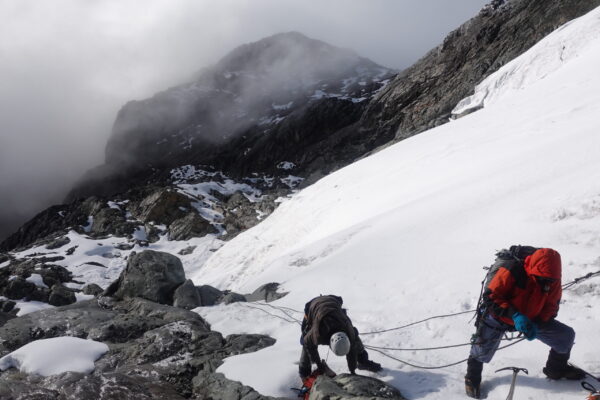
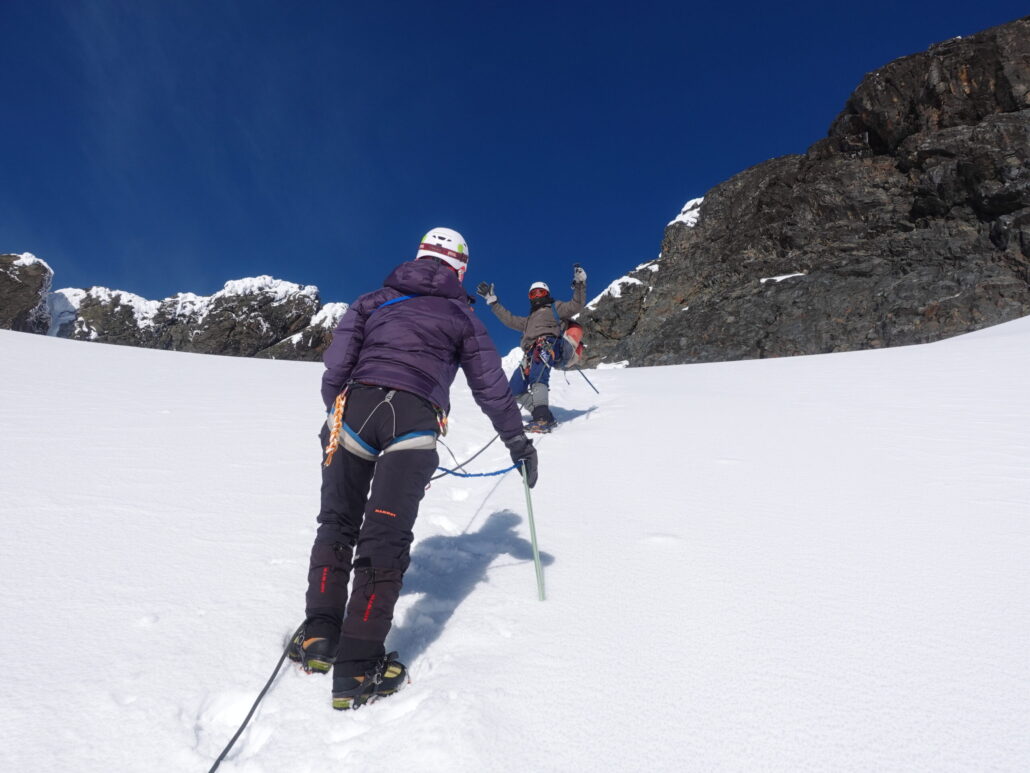
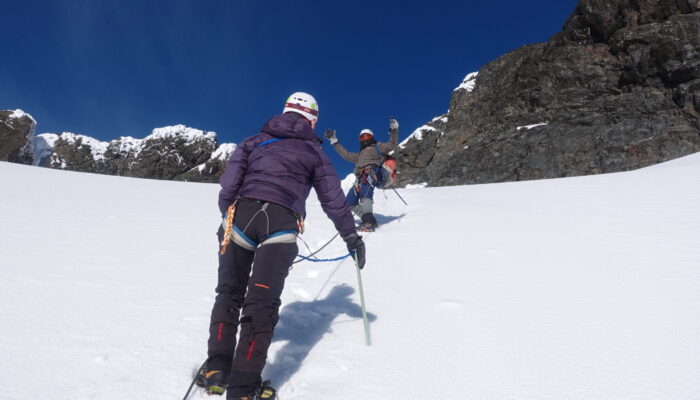
Rwenzori trekking ranges from moderate (Mahoma Loop, 3 days, maximum 3,200m) to strenuous (full circuit with Margherita summit, 7–9 days, maximum 5,109m). The standard circuit routes require good fitness, the ability to walk 6–10 hours per day on variable terrain, and comfort with cold, wet conditions. The summit approach adds glacier travel and basic ice climbing to the demands of the circuit, requiring crampons and ice axes. The primary challenges specific to the Rwenzori — compared to other East African treks — are the consistently wet conditions, the bog sections on the Central Circuit, and the technical nature of the Margherita glacier. Prior multi-day trekking experience is strongly recommended for the full circuit. The Mahoma Loop is accessible to most active adults without prior mountain experience.

What should I pack for a Rwenzori trek?
Essential personal equipment includes waterproof, ankle-supporting hiking boots that have been broken in before the trek (non-negotiable — new boots cause serious issues in the bog sections), a sleeping bag rated to at least -10°C (-15°C for the Bukurungu camping route and summit nights), waterproof gaiters, waterproof over-trousers and jacket, warm base layers, a fleece or down mid-layer, waterproof gloves, a warm hat, and a headtorch with spare batteries. Trekking poles are strongly recommended for all routes. Summit equipment — crampons, ice axes, helmets, ropes — is provided and fitted by the guide team on Margherita routes. Aloyo Safaris provides a comprehensive, route-specific kit list as part of every pre-departure information pack.

What is the weather like in the Rwenzori Mountains?

The Rwenzori generates its own weather systems and earns its name — Rainmaker — throughout the year. Even in the dry seasons (June to August, December to February), rainfall is possible at any altitude, and the afro-alpine and glacial zones are frequently in cloud for significant portions of the day. The lower forest and bamboo zones are warm and humid; the moorland zone is cool and often misty; the afro-alpine zone is cold, frequently wet, and subject to rapid weather changes; the glacial zone is genuinely cold (below freezing at night, approaching zero during the day) with unpredictable summit conditions. Morning hours tend to offer the clearest weather; afternoon and evening cloud is the norm across all seasons. Total annual precipitation exceeds three metres. Waterproofing is not optional — it is the foundation of a successful trek.

How much does it cost to trek the Rwenzori Mountains?

The cost of a Rwenzori trek depends on the route, duration, and group size. Uganda Wildlife Authority charges USD $30 per person per day in park fees. RMS or RTS guide and porter fees are charged per day per person and per porter respectively, and vary by route operator. A full 8-day Kilembe Trail summit expedition for a solo trekker typically runs between USD $1,800 and $2,500 all-inclusive (excluding international flights and personal gear), reducing significantly for two or more people sharing guide and porter costs. The three-day Mahoma Loop is considerably less — approximately USD $600 to $800 per person. Aloyo Safaris provides a precise, itemised quote for every expedition inquiry with no hidden costs.

Is the Rwenzori suitable for families?

Families with fit, motivated teenagers (typically 15 years and older) can undertake the Rwenzori Mahoma Loop comfortably with appropriate preparation. The full Central Circuit and Kilembe Trail expeditions are best suited to adults and very fit teenagers with prior trekking experience. The minimum age for all Rwenzori treks is generally 12 years, with UWA guidance recommending an assessment of each child’s fitness and experience individually. Aloyo Safaris designs family-specific itineraries with adjusted daily distances, additional acclimatisation time, and enhanced porter support. The Mahoma Loop pairs naturally with Queen Elizabeth National Park game drives and Kazinga Channel for a family-focused western Uganda circuit that requires neither the commitment of the full circuit nor the abandonment of the mountains entirely.

How do I get to Rwenzori Mountains National Park from Kampala?

The standard access route is by private road transfer from Kampala or Entebbe to Kasese town, approximately 380 kilometres and 5 to 6 hours depending on road conditions and traffic through Kampala. Aloyo Safaris arranges all transfers in private 4×4 vehicles with a dedicated driver-guide. Charter flights from Entebbe to Kasese Airport reduce the journey to approximately 1.5 hours and are strongly recommended for travellers combining the Rwenzori with other western Uganda parks on a tight schedule. Kasese Airport is served by charter operators year-round. From Kasese, the Nyakalengija trailhead (Central Circuit) is 22 kilometres by road (approximately 45 minutes); the Kilembe trailhead is 14 kilometres (approximately 25 minutes).

What wildlife can I see on a Rwenzori trek?

Wildlife encounters on the Rwenzori depend significantly on altitude and vegetation zone. In the montane forest (lower zones), expect L’Hoest’s monkeys, black-and-white colobus, olive baboons, and forest elephants (tracks and browse evidence more commonly than direct sightings). Chimpanzees are present in the lower forest but sightings are irregular — for reliable chimp encounters, Kibale National Park remains the better choice. The birdlife is exceptional throughout, with over 217 recorded species including 19 Albertine Rift endemics. The Rwenzori turaco, handsome francolin, strange weaver, and Rwenzori batis are highlights. In the afro-alpine zone, three-horned chameleons are commonly encountered on the trail vegetation. The rare Rwenzori leopard is present in the heather zone; encounters are uncommon but documented.

Do I need previous mountain experience for the Rwenzori?

For the Mahoma Loop (3 days, maximum 3,200m), no prior mountain experience is necessary beyond a general level of fitness and walking ability. For the full circuit routes (Central Circuit or Kilembe Trail) without summit attempt, prior multi-day trekking experience in varied terrain is strongly recommended. For the Margherita summit specifically, prior experience at altitude — ideally above 4,000 metres — and comfort with basic glacier techniques (crampons, ice axes, roped travel) makes the experience significantly safer and more enjoyable. Technical glacier skills are taught and supervised by the guide team, but those who arrive with some background find the transition to summit conditions considerably less stressful. Aloyo Safaris assesses each client’s experience during the planning phase and recommends the appropriate route and duration accordingly.
Best Time to Trek the Rwenzori Mountains

Main Dry Season: June to August


The June-to-August dry season is the most popular and, in most practical respects, the most favourable time for Rwenzori trekking. The trails are at their firmest, the glacier sections safest, and the summit probability — while never guaranteed at any time of year — is at its highest. July and August coincide with northern hemisphere school holidays and draw the largest proportion of international visitors. Aloyo Safaris recommends booking at least four to six months in advance for July and August expedition dates. The dry-season atmosphere in the afro-alpine zone is also at its most photogenic — the giant lobelias in clearer, drier light have a graphic, almost sculptural quality that the mist season softens.

Secondary Dry Season: December to February

The December-to-February window is the Rwenzori’s second dry season and, particularly for travellers who cannot travel in northern summer, an excellent alternative. Conditions are broadly comparable to June-August, with stable trail surfaces, lower rainfall, and good summit probability. December combines a Rwenzori trek naturally with other Uganda safari activities in a single two-week journey. This period is particularly recommended for families, as it coincides with school holiday schedules across many countries.

Green Season: March to May and September to November

The Rwenzori’s name translates as “Rainmaker” and the mountain earns it during the green seasons, receiving over three metres of annual rainfall. The wet seasons are not a time when the mountain closes — trekking continues year-round — but the trails, particularly in the bog sections of the Central Circuit, become significantly more challenging. The reward for wet-season trekking is considerable: the afro-alpine vegetation is at its most vivid, every waterfall fuller and more dramatic, the mosses and lichens glistening with an intensity impossible in dry conditions. Lodge rates are lower, visitor numbers are far smaller, and the mountain has a particular quality of solitude in rain that its dry-season visitors never experience. For trekkers who want the Rwenzori to themselves and are comfortable with genuine mountain weather, the green season is compelling.

Year-Round Truths

No Rwenzori trek is truly dry. The mountain generates its own weather systems regardless of season, and the bog sections in particular require waterproofing year-round. The summit glacier is subject to rapid weather changes that make any pre-arranged summit date advisory rather than guaranteed. A contingency day built into any summit itinerary — to hold at Elena or Margherita Camp if conditions dictate — is always worth the planning flexibility. Aloyo Safaris incorporates this contingency into every summit-oriented expedition booking.

Your Rwenzori Expedition Begins With One Conversation

There is a version of these mountains that belongs specifically to you — calibrated to your fitness, your experience, your available days, your ambitions. Perhaps Margherita Peak is the goal that has been in the back of your mind for years and this is the year to answer it. Perhaps the Mahoma Loop is the right beginning — three days in a landscape unlike anywhere you have been, a first conversation with a mountain that you suspect you will return to. Perhaps you are planning for a family whose teenage members need to be challenged in a way that a conventional safari cannot offer. Perhaps you want to combine the Rwenzori with gorillas in Bwindi, chimpanzees in Kibale, and game drives across Queen Elizabeth — a two-week Uganda Safari of genuine depth and variety.

Whatever your Rwenzori Expedition, Aloyo Safaris has the expertise, the partner relationships, and the genuine on-the-ground knowledge to make it happen with the precision and care that an expedition like this deserves. We do not apply templates to extraordinary mountains. Every expedition begins with a conversation about who you are and what you want to stand on top of — literally and figuratively.

Begin through our contact page or our Rwenzori trekking expeditions page. A dedicated Aloyo Safaris expedition designer will respond within a few hours.

Email: book@aloyosafaris.com   WhatsApp: +254 110 866 421